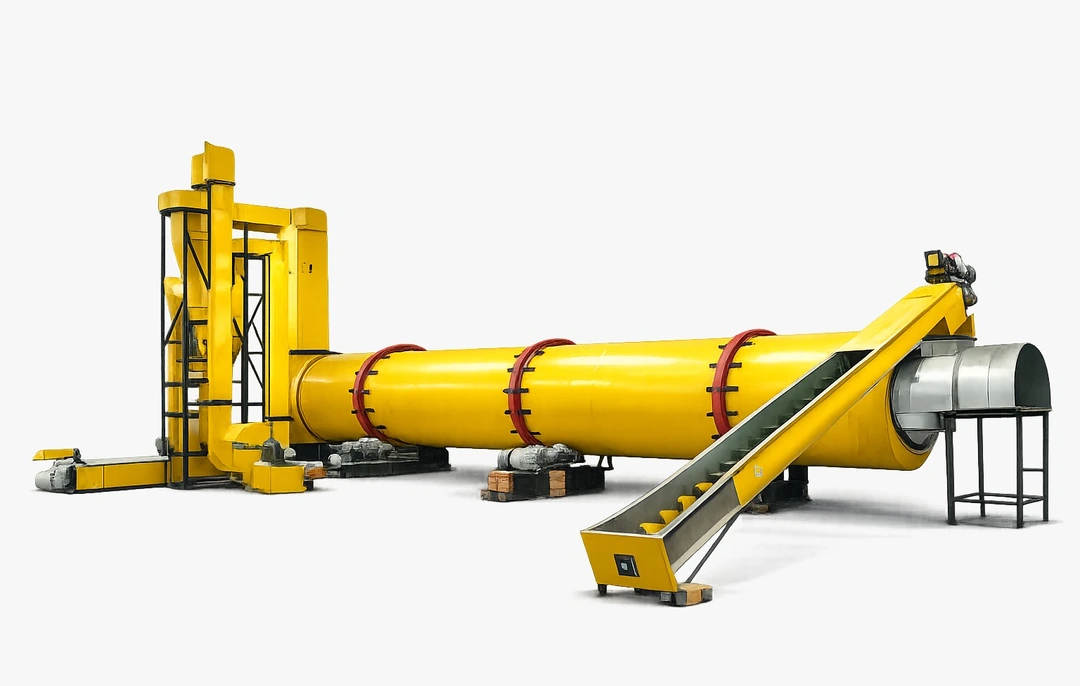
Phosphate fertilizer drying covers single superphosphate (SSP), made by reacting rock with sulphuric acid, and diammonium phosphate (DAP), made from phosphoric acid and ammonia. Both leave the granulator wet, but SSP carries free acid and releases fluorine compounds, while DAP releases ammonia, so dryer metallurgy and off-gas treatment differ from neutral salt drying.
To dry phosphates (SSP / DAP), GEM recommends the Rotary Dryer. Typical moisture is 4–12% in the feed and 1–4% after drying. Rotary Louvre Dryer, Industrial Cooler and Combination Fluid Bed Dryer are used when the feed or site calls for it. Every project starts with a pilot trial on your own sample.
A rotary dryer handles high-tonnage SSP and DAP granules with tolerance for sticky phases and variable recycle. A louvre dryer is chosen for gentler drying of finished granules, and a fluid bed or rotary cooler conditions product before coating.
| Typical feed moisture | 4–12% |
| Typical target moisture | 1–4% |
| Recommended dryer | Rotary Dryer |
| Alternatives | Rotary Louvre Dryer, Industrial Cooler, Combination Fluid Bed Dryer |
| Application area | Fertilizers & Agrochemicals |
| Industries | Fertilizers & Agrochemicals, Chemicals & Specialty Chemicals |
Correct drying keeps nutrients at declared grade, hardens granules and prevents caking, avoiding regulatory and customer penalties. Good scrubbing integration helps plants meet emission consent conditions.
Plants searching for a SSP dryer or comparing a DAP dryer usually need three answers: which dryer fits, what it costs to run, and how fast it pays back. For Phosphates (SSP / DAP), we start from your throughput, current moisture (typically 4–12%) and the target (1–4%), trial a sample on the Rotary Dryer, and return a sized recommendation with a budget quotation for your fertilizers and chemicals operation.
We trial your material in our pilot facility before any equipment decision, then size the dryer from real data.
Describe it in the form, or message an engineer directly.