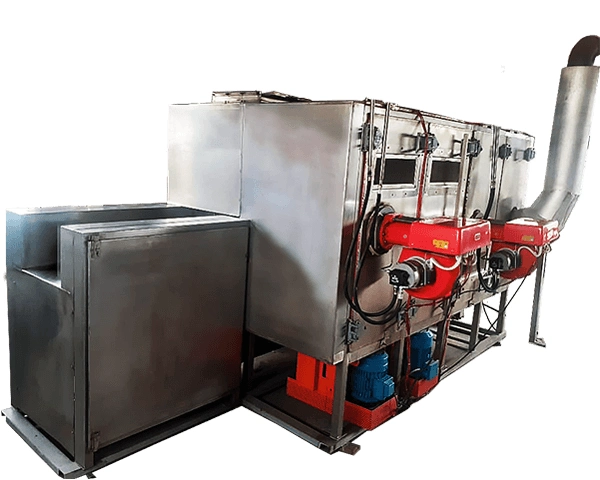
Oats drying has two jobs: bringing field oats to 12–13% for storage, and in food plants, heat-treating the groats to inactivate lipase so that the fat does not turn rancid. Oats carry more oil than most cereals and a light, fluffy hull, so they dry differently from wheat and need careful temperature control.
To dry oats, GEM recommends the Grain Dryer. Typical moisture is 16–20% in the feed and 12–13% after drying. Vibratory Fluid Bed Dryer and Industrial Roaster are used when the feed or site calls for it. Every project starts with a pilot trial on your own sample.
A grain dryer handles field oats for storage at moderate temperature. A vibratory fluid bed dries steamed oat flakes gently after rolling, and a roaster or kiln is chosen for the stabilising and toasting step that develops the nutty flavour of oat products.
| Typical feed moisture | 16–20% |
| Typical target moisture | 12–13% |
| Recommended dryer | Grain Dryer |
| Alternatives | Vibratory Fluid Bed Dryer, Industrial Roaster |
| Application area | Grains, Pulses & Seeds |
| Industries | Agriculture & Grain Processing, Food & Beverage |
Proper stabilising gives oat products a longer shelf life and a clean flavour that food brands insist on. Dry, stored oats also allow processors to run year-round from one harvest.
Plants searching for a oats dryer or comparing a oat kiln usually need three answers: which dryer fits, what it costs to run, and how fast it pays back. For Oats, we start from your throughput, current moisture (typically 16–20%) and the target (12–13%), trial a sample on the Grain Dryer, and return a sized recommendation with a budget quotation for your agriculture and food operation.
We trial your material in our pilot facility before any equipment decision, then size the dryer from real data.
Describe it in the form, or message an engineer directly.