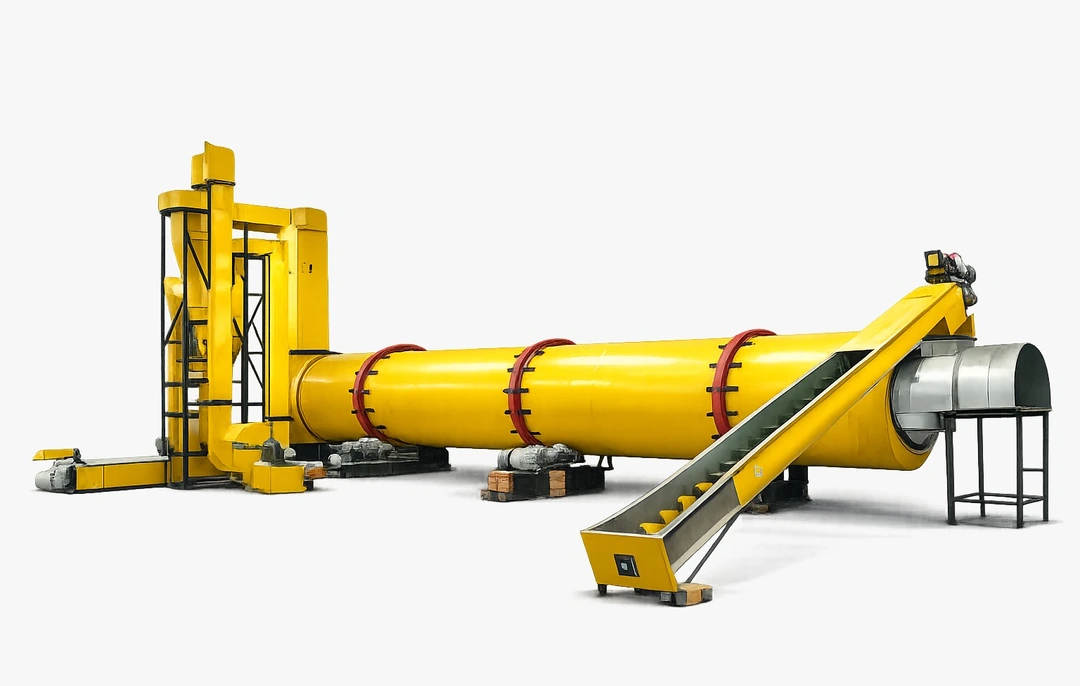
Flotation concentrate drying deals with very fine filter cake from copper, lead, fluorspar, graphite and other flotation circuits. Residual reagents, fine particle size and cohesion make these cakes harder to dry evenly than coarse ores, and many smelters require concentrate dried well below shipping moisture.
To dry flotation concentrates, GEM recommends the Rotary Tube Bundle Dryer and Flash Dryer. Typical moisture is 8–15% in the feed and 0.2–8% after drying. Rotary Dryer and Paddle Dryer are used when the feed or site calls for it. Every project starts with a pilot trial on your own sample.
A steam tube dryer gives indirect heating with low gas volume, suiting sulphides needed bone-dry for flash smelting. A flash dryer with disintegrator handles fine non-sulphide cake quickly. Rotary dryers suit coarse concentrate at moderate targets; a paddle dryer handles very sticky cakes.
| Typical feed moisture | 8–15% |
| Typical target moisture | 0.2–8% |
| Recommended dryer | Rotary Tube Bundle Dryer, Flash Dryer |
| Alternatives | Rotary Dryer, Paddle Dryer |
| Application area | Minerals, Ores & Ceramics |
| Industries | Minerals, Mining & Ceramics |
Drying concentrate to buyer limits avoids moisture penalties and freight on water. For smelters, consistent dry feed allows stable operation of flash furnaces and lowers off-gas handling costs.
Plants searching for a flotation concentrate dryer or comparing a copper concentrate drying usually need three answers: which dryer fits, what it costs to run, and how fast it pays back. For Flotation Concentrates, we start from your throughput, current moisture (typically 8–15%) and the target (0.2–8%), trial a sample on the Rotary Tube Bundle Dryer, and return a sized recommendation with a budget quotation for your minerals operation.
We trial your material in our pilot facility before any equipment decision, then size the dryer from real data.
Describe it in the form, or message an engineer directly.