Coconut Chips & Flakes

Coconut Chips and Flakes Drying

Coconut chips and flakes drying turns thin slices of fresh kernel, often sweetened or salted, into a crisp snack or garnish. Unlike desiccated granules, these large curling pieces are judged by eye, so even colour, flatness and crunch matter as much as moisture. Many lines dry first and then toast to a light golden finish.

Quick answer

To dry coconut chips & flakes, GEM recommends the Band Dryer (Beltotherm). Typical moisture is 45–50% in the feed and below 3% after drying. Tunnel & Belt Oven and Multi-Pass Conveyor Dryer are used when the feed or site calls for it. Every project starts with a pilot trial on your own sample.

1998established112+installations7countriesDried & Testedin-house pilot trialsCertifications · Case studies
The challenge

What makes Coconut Chips & Flakes hard to dry

  • Sugar-coated or syruped slices turn sticky and caramelise quickly, marking the belt and darkening pieces at hot spots.
  • Thin slices curl and overlap as they shrink, so piles on the belt leave soft, under-dried centres in the batch.
  • Toasting from white to golden happens over a narrow window; a few degrees too many produces bitter, brown chips.
  • Finished chips are fragile and hygroscopic, so breakage at transfer points and moisture pick-up before packing must be controlled.
How GEM dries it

The right dryer for Coconut Chips & Flakes

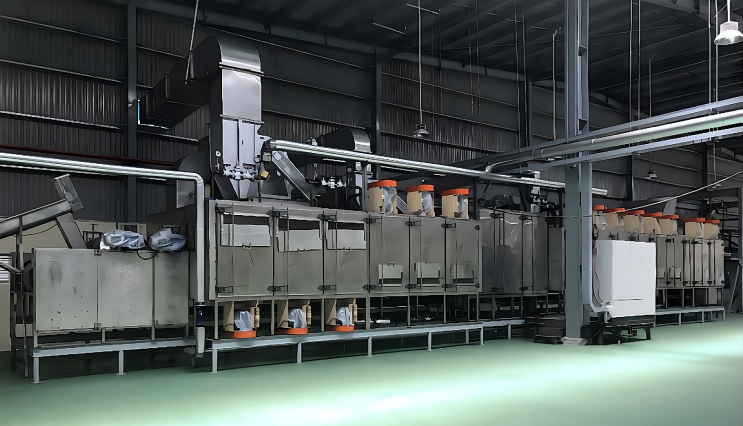
A Beltotherm band dryer spreads slices in a single, evenly loaded layer and can run its last zones hotter as a toasting section. A separate tunnel oven is chosen when toasted colour must be tightly controlled; multi-pass dryers suit untoasted flakes.

Typical feed moisture45–50%
Typical target moisturebelow 3%
Recommended dryerBand Dryer (Beltotherm)
AlternativesTunnel & Belt Oven, Multi-Pass Conveyor Dryer
Application areaFood Dehydration
IndustriesFood & Beverage
The value

What drying Coconut Chips & Flakes unlocks

Coconut chips sell at several times the value of raw kernel per kilogram. A line that delivers uniform colour and crunch cuts rejects, supports branded retail packs and opens export snack and cereal-topping markets.

Dried Coconut Chips & Flakes becomes

  • Toasted coconut chips snacks
  • Sweetened coconut flakes
  • Granola and muesli toppings
  • Cake and dessert garnish
For buyers

Buying a Coconut Chips & Flakes dryer?

Plants searching for a coconut chips dryer or comparing a coconut flakes drying machine usually need three answers: which dryer fits, what it costs to run, and how fast it pays back. For Coconut Chips & Flakes, we start from your throughput, current moisture (typically 45–50%) and the target (below 3%), trial a sample on the Band Dryer, and return a sized recommendation with a budget quotation for your food operation.

FAQ

Coconut Chips & Flakes: questions buyers ask

Can the same machine dry and toast coconut chips?
Yes. A multi-zone band dryer can run final zones at toasting temperature, giving dried and lightly toasted chips in one pass. Where deep, uniform toasting is required, a separate belt oven after the dryer gives tighter colour control.
How do we stop sweetened chips sticking to the belt?
Control syrup pick-up before drying, choose a suitable belt surface and keep early zones moderate so sugar does not melt onto the belt. Loading density and belt cleaning frequency are confirmed during a pilot trial.
Related

Related materials

Compare all 4 materials in Coconut Processing or browse the wider Food Dehydration family.

Send us a sample. See it dried.

We trial your material in our pilot facility before any equipment decision, then size the dryer from real data.

  1. Tell us the material, moisture and throughput.
  2. An engineer confirms the trial plan and sample shipping.
  3. You get drying data and a sized recommendation with a budget quotation.

Material not listed? Talk to our technical expert.

Describe it in the form, or message an engineer directly.

Request a trial or quotation

    An engineer replies within one working day. We never share your details.

    whatsapp