


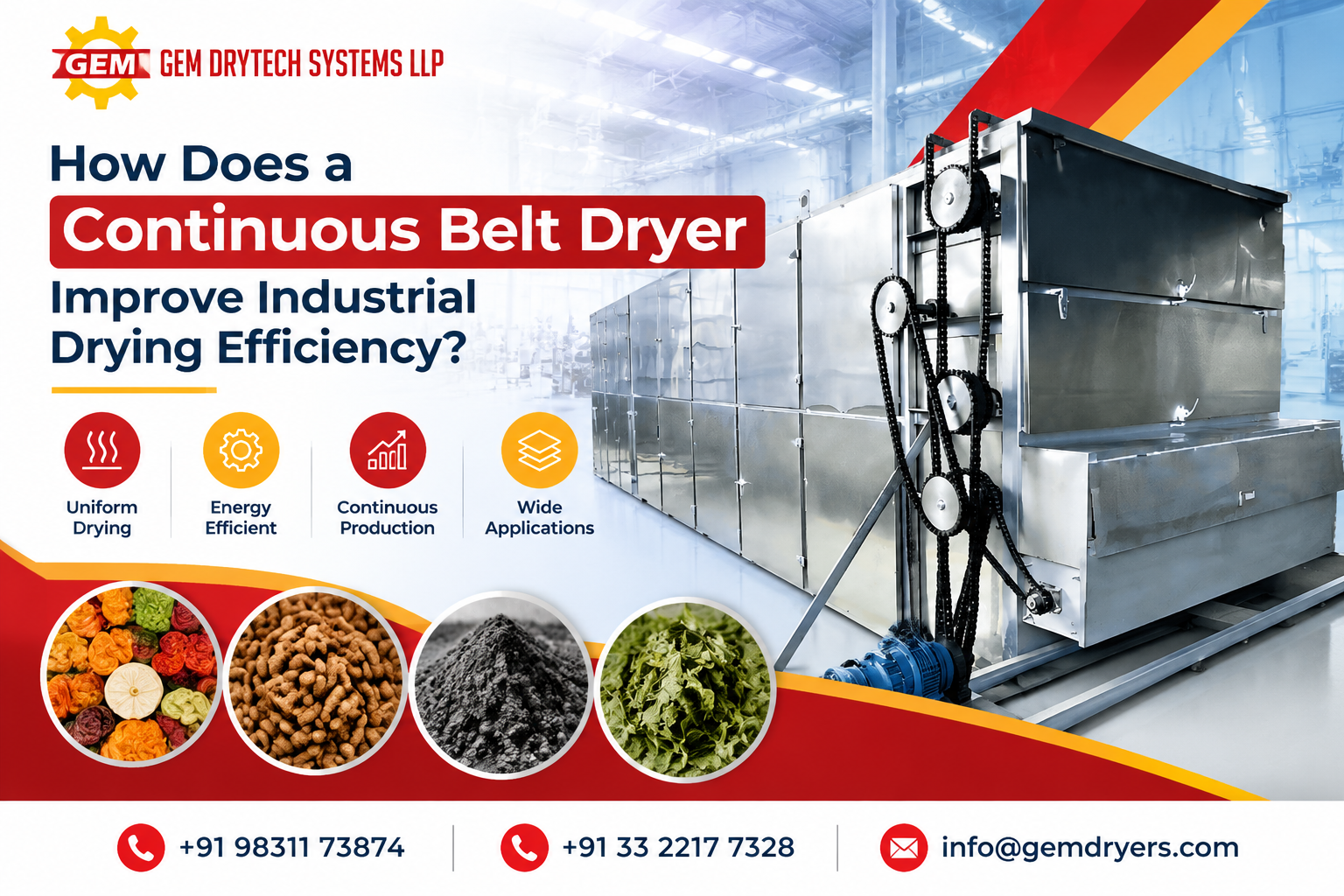
How Does a Continuous Belt Dryer Improve Industrial Drying Efficiency?
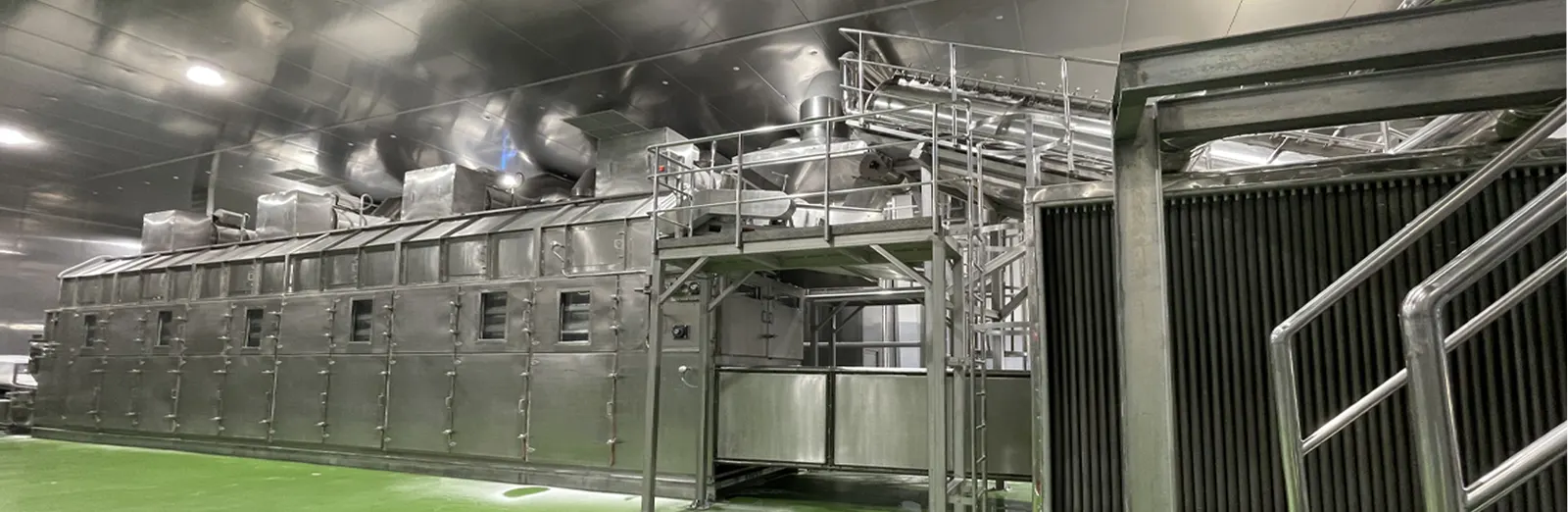
Industries that process food products, agricultural materials, biomass, chemicals, pharmaceuticals, sludge, and other moisture-sensitive materials often require reliable drying solutions to achieve consistent product quality and production efficiency.
Traditional batch drying methods can create challenges when manufacturers need higher production capacity, continuous operation, and uniform moisture removal. A continuous belt dryer provides an advanced solution by allowing materials to move continuously through controlled drying zones while maintaining precise control over temperature, airflow, and residence time.
Unlike batch dryers that require repeated loading and unloading cycles, a continuous belt dryer supports uninterrupted material feeding, drying, and discharge. This makes it suitable for large-scale industrial operations where productivity, consistency, and energy efficiency are important.
A properly designed industrial belt dryer helps manufacturers improve process control, reduce manual handling, and achieve consistent drying results across different applications.
This guide explains what a continuous belt dryer is, how it works, how it improves industrial drying efficiency, its applications, benefits, and important factors to consider before selecting the right continuous drying equipment.
What Is a Continuous Belt Dryer?
A continuous belt dryer is an industrial drying system that continuously transports wet material through a drying chamber using a moving conveyor belt.
The material travels through controlled drying zones where heated air removes moisture through evaporation. Temperature, airflow, belt speed, and residence time can be adjusted according to the material characteristics and required final moisture level.
A typical continuous belt dryer includes:
- Material feeding system
- Conveyor belt
- Drying chambers
- Heating system
- Air circulation system
- Exhaust system
- Product discharge section
The conveyor system allows materials to move continuously through the drying process without stopping between production cycles.
A continuous belt dryer can be customized according to:
- Material type
- Production capacity
- Moisture content
- Drying temperature requirements
- Space availability
- Final product specifications
This makes it suitable for industries requiring reliable and scalable drying solutions.
How Does a Continuous Belt Dryer Work?
A continuous belt dryer works by moving wet material through a controlled stream of heated air.
The process begins when wet material enters the dryer through a feeding system. The material is evenly distributed across the conveyor belt to ensure proper airflow and uniform drying.
As the belt moves through the drying chamber, heated air comes into contact with the material. Heat transfers into the product, causing moisture inside the material to evaporate.
The moisture-filled air is then removed through an exhaust system, while fresh or recirculated air continues the drying process.
The main operating parameters include:
- Drying temperature
- Airflow rate
- Belt speed
- Material loading
- Residence time
- Initial moisture content
- Final moisture requirement
By controlling these parameters, manufacturers can achieve consistent moisture reduction and maintain product quality.
What Is the Working Principle of a Continuous Belt Drying System?
The working principle of a belt drying system is based on controlled heat and mass transfer.
When wet material enters the dryer, it is placed evenly on the moving belt. Heated air passes through the drying chamber and transfers heat to the product.
The heat causes moisture within the material to move toward the surface and evaporate. The moisture then transfers into the drying air and exits through the exhaust system.
Many continuous belt dryers use multiple drying zones to improve process control.
For example:
- The first zone focuses on removing surface moisture.
- Middle zones provide controlled moisture reduction.
- Final zones achieve the desired final moisture level.
This multi-stage drying approach helps manufacturers process materials that require gradual moisture removal while maintaining product characteristics.
How Does a Continuous Belt Dryer Improve Industrial Drying Efficiency?
A continuous belt dryer improves industrial drying efficiency by combining automated material movement with controlled drying conditions.
1. Supports Continuous Production
One of the biggest advantages of a continuous belt dryer is uninterrupted operation.
Unlike batch dryers, where materials must be loaded, dried, and unloaded separately, continuous drying equipment allows materials to move continuously through the system.
This helps manufacturers:
- Increase production capacity
- Reduce downtime
- Improve workflow efficiency
- Maintain consistent output
For industries with large production requirements, continuous operation can significantly improve overall productivity.
2. Provides Consistent Drying Quality
Maintaining uniform moisture levels is a major challenge in industrial drying.
A continuous belt dryer provides better control over:
- Temperature distribution
- Airflow movement
- Drying time
- Material exposure
Multiple drying zones allow manufacturers to adjust conditions throughout the process.
This helps reduce uneven drying and supports consistent product quality.
3. Improves Production Capacity
Continuous belt dryers are designed for large-scale industrial processing.
Because material continuously moves through the dryer, manufacturers can process higher volumes compared with traditional batch systems.
Production capacity depends on:
- Material properties
- Feed rate
- Moisture content
- Drying temperature
- Belt configuration
- Residence time
A properly designed system helps manufacturers achieve the required output while maintaining drying performance.
4. Optimizes Energy Consumption
Energy efficiency is an important consideration in industrial drying.
Modern continuous belt dryers can include features such as:
- Air recirculation systems
- Heat recovery options
- Controlled airflow management
- Multi-stage drying zones
These features help optimize heat usage and improve overall thermal efficiency.
The actual energy performance depends on material characteristics, operating conditions, and dryer configuration.
5. Reduces Manual Handling
Continuous drying systems reduce the need for repeated manual loading and unloading.
Automated feeding and discharge systems improve operational efficiency while reducing labor requirements.
This also helps create a more controlled and consistent production environment.
What Industries Use Continuous Belt Dryers?
Continuous belt dryers are used across industries where controlled moisture removal and high-volume production are required.
Food Processing Industry
Food manufacturers use continuous belt dryers for products such as:
- Fruits
- Vegetables
- Herbs
- Spices
- Food ingredients
Controlled drying conditions help maintain product quality while achieving the required moisture level.
Agricultural Processing
Agricultural materials often require drying before storage, transportation, or further processing.
Continuous belt dryers can be used for:
- Grains
- Seeds
- Plant materials
- Agricultural by-products
Biomass Processing
Biomass materials require moisture reduction before processes such as:
- Pellet production
- Briquetting
- Combustion
- Gasification
A continuous belt drying system helps improve biomass handling and processing efficiency.
Chemical Processing
Certain chemical powders, granules, and industrial materials can be processed using continuous drying technology.
Controlled temperature and airflow help achieve the required drying conditions.
Sludge and Waste Management
Continuous belt dryers can support sludge drying applications by reducing moisture content and improving:
- Handling
- Transportation
- Storage
- Further processing
Continuous Belt Dryer vs Traditional Batch Dryer
| Factors | Continuous Belt Dryer | Traditional Batch Dryer |
|---|---|---|
| Production Method | Continuous operation | Batch processing |
| Material Movement | Automated conveyor movement | Manual loading and unloading |
| Production Capacity | Suitable for high-volume production | Limited capacity |
| Drying Control | Multiple controlled zones | Limited control |
| Labor Requirement | Lower manual involvement | Higher manual handling |
| Process Consistency | Uniform drying conditions | More variation between batches |
What Are the Different Types of Continuous Belt Dryers?
Single Pass Continuous Belt Dryer
A single pass continuous belt dryer moves material through the drying chamber once.
It is suitable for applications where the required drying time can be achieved within a single drying path.
Multi Pass Continuous Belt Dryer
A multi-pass design uses multiple belt levels to increase residence time within a smaller installation area.
This is useful when materials require longer drying periods.
Mesh Belt Dryer
A mesh belt dryer uses a permeable conveyor surface that allows heated air to pass through or around the material.
This improves airflow contact and supports efficient moisture removal.
Conveyor Dryer
A conveyor dryer is a broader category of continuous drying equipment where materials move through controlled drying zones using a conveyor system.
A belt dryer is one type of conveyor-based drying technology.
Factors to Consider When Selecting Continuous Drying Equipment
Choosing the right continuous drying equipment requires understanding the material and production requirements.
Material Characteristics
Consider:
- Particle size
- Shape
- Density
- Stickiness
- Thermal sensitivity
Moisture Content
Initial and final moisture levels determine the required drying capacity.
Production Requirements
The system should match:
- Production volume
- Feed rate
- Operating hours
- Output requirements
Drying Temperature
Temperature should be selected based on product characteristics to maintain quality.
Airflow Requirements
Proper airflow ensures effective heat transfer and moisture removal.
Final Product Quality
Manufacturers should consider:
- Moisture level
- Texture
- Structure
- Storage requirements
What Should You Look for in a Continuous Belt Dryer Manufacturer?
Selecting the right continuous belt dryer manufacturer is important for achieving reliable performance and long-term efficiency.
A professional manufacturer should provide application-based engineering instead of standard equipment solutions.
| Factors | Good Manufacturer | Poor Manufacturer |
|---|---|---|
| Custom Design | Yes | No |
| Pilot Trials | Yes | No |
| Engineering Support | Yes | Limited |
| Energy Optimization | Yes | Basic |
| Process Understanding | Yes | Limited |
| After-Sales Service | Reliable | Minimal |
A reliable manufacturer evaluates material behavior, drying requirements, production capacity, and process conditions before designing the system.
Why Choose Gem Drytech for Continuous Belt Drying Solutions?
Gem Drytech Systems LLP provides customized industrial drying solutions designed according to specific material and process requirements.
With extensive engineering experience, Gem Drytech develops continuous belt drying systems for industries including:
- Food processing
- Chemical industries
- Pharmaceutical industries
- Biomass processing
- Sludge and waste management
The company focuses on:
- Customized dryer design
- Application-based engineering
- Pilot testing support
- Energy-efficient drying solutions
- Industrial process optimization
Gem Drytech provides advanced drying technologies including belt dryers, mesh belt dryers, conveyor dryers, and other customized industrial drying systems.
For reliable continuous drying solutions:
Get a Customized Continuous Belt Dryer Designed for Your Industry
Choosing the right continuous belt dryer manufacturer is essential for achieving efficient drying performance, consistent product quality, and reliable long-term operation.
Gem Drytech Systems LLP develops customized continuous belt drying systems based on material characteristics, production requirements, and industrial applications.
Whether you need an industrial belt dryer, conveyor dryer, or advanced belt drying system, Gem Drytech provides application-focused solutions designed to meet your specific processing needs.
Contact Gem Drytech Systems LLP today to discuss your drying requirements and explore a customized solution for your industry.
Frequently Asked Questions About Continuous Belt Dryers
What Is a Continuous Belt Dryer?
A continuous belt dryer is an industrial drying system that continuously moves material through controlled drying zones while removing moisture through heated air.
How Does a Continuous Belt Dryer Improve Efficiency?
It improves efficiency by providing continuous production, controlled drying conditions, reduced manual handling, and better process consistency.
What Industries Use Continuous Belt Dryers?
Continuous belt dryers are used in food processing, agriculture, biomass, chemical, pharmaceutical, and sludge drying applications.
What Is the Difference Between a Belt Dryer and a Conveyor Dryer?
A belt dryer is a type of conveyor dryer designed specifically for continuous moisture removal using controlled airflow and temperature.
How Do I Select the Right Continuous Belt Dryer?
Selection depends on material properties, moisture content, production capacity, temperature requirements, airflow, and final product specifications.
