


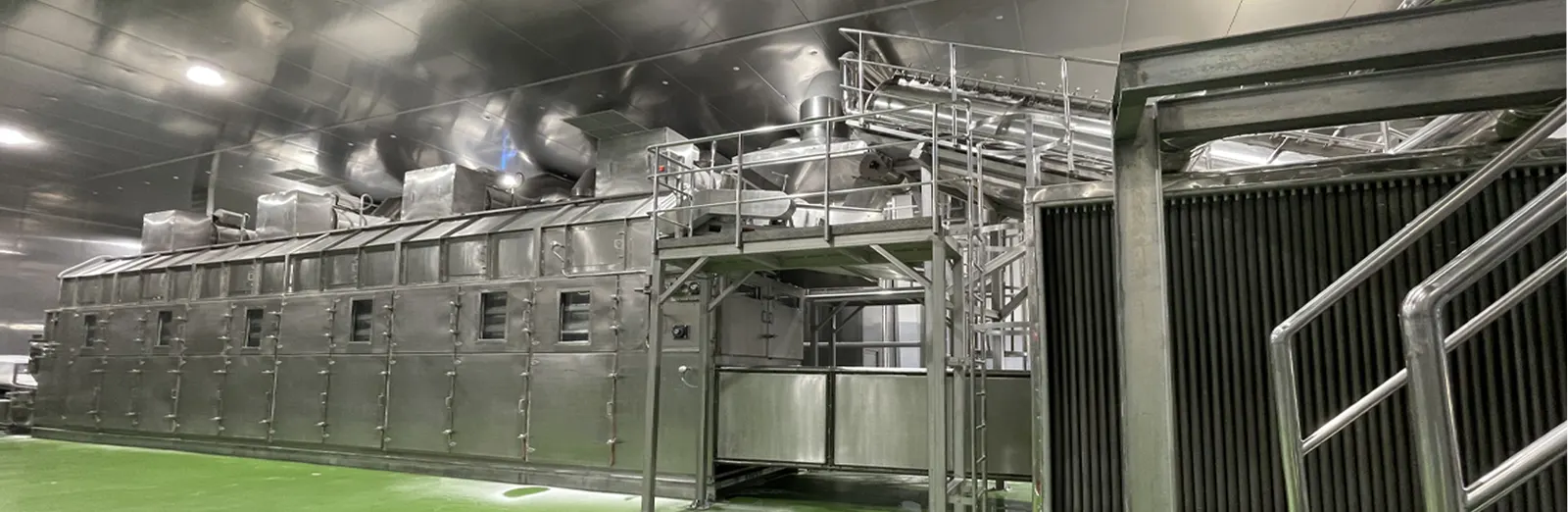
Choose the right industrial partner for a rotary dryer for food that meets standards

Food exporters know one thing for sure: moisture is the silent saboteur. It dulls color, encourages spoilage, and pushes down shelf life—exactly what you cannot afford when your products are shipping to markets like Japan, Vietnam, or the Philippines. This is where the right industrial dryer becomes more than equipment; it becomes a business enabler.
Among the many options, the rotary dryer for food stands out as a versatile, robust, and scalable choice for grain, snacks, spices, animal feed, and biomass‑based food ingredients. When paired with spray dryers for powders and tray dryers for delicate spices, it can power an entire export‑ready drying line.
This guide walks you through how rotary dryers for food systems work, when they make the most sense, and how they fit into a broader drying strategy for food exporters.
Why Drying Matters More Than You Think
Good drying is not just about “removing water.” It’s about preserving flavor, color, and texture while meeting international standards for moisture, microbial load, and shelf life. Many food exports fail quality checks not because of the recipe, but because of inconsistent drying across batches.
Modern food plants are investing more in controlled drying because it directly impacts yield, rework, and returns. A single poorly dried batch can trigger a complaint, a recall, or even the loss of a long‑term export contract.
Among the available technologies, the rotary dryer for food is gaining steady traction among Indian and Asian food exporters because it balances throughput, energy use, and product quality.

What Is a Rotary Dryer for Food?
A rotary dryer for food is a drum‑shaped industrial dryer that rotates slowly while hot air passes through the material inside. As the drum turns, the product is lifted and cascaded, exposing it repeatedly to the hot air stream. This continuous tumbling ensures uniform and gentle drying, which is ideal for bulk food materials like grains, cereals, snacks, and animal feed.
The main body of the rotary drum is inclined slightly, so the material gradually moves from the feed end to the discharge end during the drying cycle. The drum is insulated to minimize heat loss, and the airflow rate, temperature, and drum speed are controlled to match the product’s sensitivity and moisture target.
Because of its continuous operation and robust construction, a rotary dryer for food is often the backbone of medium‑ to large‑scale food export lines.
How Does a Rotary Dryer for Food Work in the Industry?
In a typical food‑processing setup, the rotary dryer for food sits between prior unit operations (like extrusion, mixing, or granulation) and downstream stages such as cooling, sieving, and packaging.
Here’s a simple flow:
- Damp product enters the drum at the higher end.
- The drum rotates, lifting and dropping the material.
- Hot air (often from a burner or waste‑heat recovery system) flows through the drum.
- Moisture evaporates and is carried away by the exhaust.
- The dried product exits at the lower end, cooled and ready for grading or packaging.
For grain‑based snacks, extruded noodles, textured vegetable protein, or animal‑feed pellets, this process can bring moisture down to export‑safe levels (usually 8–12%, depending on the product) in a single, continuous pass.
Compared to batch systems, the rotary dryer for food offers higher throughput and easier integration with conveyors and graders, which is why many food exporters are choosing it for their export‑oriented lines.

When to Choose a Rotary Dryer for Food Over Other Options
Rotary dryers are not the right choice for every product. Spray dryers excel at turning liquid food formulations into instant powders, while tray dryers are ideal for high‑value spices, herbs, and delicate fruits. A vibrating fluid bed dryer gives a gentle, fluidized bed for granules and small particles.
But for certain categories, the rotary dryer for food is clearly the best fit:
- Grain and cereal products (puffed rice, snacks, extruded noodles, cereal flakes)
- Coarse and semi‑sticky food products (wet pet‑food, moist animal feed, textured vegetable protein)
- Bulk biomass‑based food ingredients (okara, spent brewer’s grains, vegetable residues converted into feed)
If your export line is moving tonnage of these materials and you need a continuous, low‑maintenance system, the rotary dryer for food is hard to ignore.
Where a spray dryer machine for food export makes sense for powders, and continuous tray dryer for food processing is preferred for premium spices, the rotary dryer for food bridges the gap between high volume and consistent quality.
Key Benefits of a Rotary Dryer for Food for Exporters
For a food exporter running a plant in India but targeting markets like Japan, Vietnam, Australia, or the Philippines, a rotary dryer for food offers several concrete advantages:
- Higher throughput and energy efficiency: Continuous operation reduces labor and downtime, while modern designs can recover and reuse heat effectively. Global food‑processing equipment reports show that energy‑efficient dryers can cut thermal costs by 15–25% over older, open‑system designs.
- Uniform drying across batches: The cascading action inside the drum helps prevent over‑drying on one side and under‑drying on another, which is crucial for export‑quality consistency.
- Compact footprint for medium‑scale plants: Compared with some tray‑dryer installations, a rotary dryer for food often takes up less floor space for the same output, making it attractive for Indian food plants operating in constrained factory layouts.
- Flexibility across product types: With adjustable airflow, temperature, and drum speed, a single rotary dryer for food can often handle several related products, giving you flexibility as your export line evolves.
When people search for an industrial dryer for a food export business, they are usually looking for exactly these traits: reliability, efficiency, and export‑ready quality.

How a Rotary Dryer for Food Handles Sticky Food Products
One of the most common worries exporters raise is “What if my product is sticky or wet?” This is exactly where a rotary dryer for food can shine.
Design features such as internal lifters, baffles, and adjustable drum speed help prevent caking and clumping. The controlled tumbling action breaks up lumps and keeps particles moving, so sticky surfaces don’t build up inside the drum.
In extruded snacks, wet pet‑food, or animal feed, the rotary dryer for food can dry the product without turning it into a solid mass, which is why manufacturers working with moisture‑rich food‑grade biomass are increasingly choosing this type of dryer.
Informational queries like how a rotary dryer handles sticky food products often reflect a plant manager’s real‑world concern about maintenance and downtime. A well‑designed rotary dryer for food reduces both by minimizing product build‑up and easing cleaning between batches.
Comparing Spray, Tray, and Rotary Dryers for Food Export
The question “Spray, Tray, or Rotary?” is really about matching the equipment to the product and the export target.
- Spray dryer machine for food export: Best for turning liquid food into fine powders (e.g., milk, coffee, fruit concentrates, instant soups). It offers fast drying, high solubility, and compact packaging, but it demands higher capital and energy inputs.
- Continuous tray dryer for food processing: Ideal for high‑value, delicate products like spices, herbs, fruits, and nuts. It allows precise temperature control and minimizes product damage, though it typically runs at lower throughput.
- Rotary dryer for food: Best for bulk, semi‑sticky, or granular foods that need continuous, robust drying at scale—grain‑based snacks, pellets, extruded products, and biomass‑based feed ingredients.
For an exporter blending multiple product lines, the optimal strategy is often a hybrid: spray dryer for instant milk powder or similar powders, tray dryer for herbal and spice drying for premium items, and rotary dryer for food for the bulk, high‑volume segments.

Why “Rotary Dryer for Food” Fits Food Export Businesses
When food exporters in India search for an industrial fluid bed dryer for export or industrial dryer for food export business, they are usually evaluating long‑term reliability, maintenance, and compatibility with international standards.
A rotary dryer for food ticks many of those boxes:
- It is relatively easy to integrate with existing conveyors, graders, and packaging lines.
- It can be designed to meet ISO 9001 and other quality standards expected by overseas buyers.
- It supports both domestic demand and export‑oriented capacity, giving you room to scale.
For manufacturers like Gem Drytech, combining innovative engineering with robust rotary dryer for food designs has helped Indian food exporters enter markets such as Japan, Indonesia, Vietnam, and the Philippines with confidence.
How to Get Started with the Right Rotary Dryer for Food
If you run a food export business, the first step is not to pick the “cheapest” or “most modern” dryer, but to match the rotary dryer for food to your product profile, capacity, and energy constraints.
Ask yourself:
- What is the typical moisture content of my product before drying?
- What is the target moisture level for export?
- How many tons per hour do I need to process?
- What kind of space and utilities (fuel, electricity) do I have available?
Once you have these answers, discussing your requirements with a rotary dryer manufacturer India makes it easier to configure the right drum length, diameter, speed, and airflow for your export line.
