Government of India Recognized Export House
● Now serving U.S. municipal wastewater & biosolids plants info@gemdrytech.com
Continuous Belt Dryers for U.S. Municipal Wastewater & Biosolids

Fewer haul trucks. A biosolids spec you can defend.

A continuous belt dryer platform engineered for U.S. WWTP sludge and biosolids — cutting hauling and land-application/disposal cost by shrinking volume 3–6×, and giving your plant a documented, Class A-capable output as PFAS-driven land-application limits tighten state by state.

  • Shrink wet biosolids mass 3–6× — fewer haul trucks, lower tipping-fee and disposal spend
  • Path to EPA 40 CFR Part 503 Class A biosolids — documented, batch-logged output
  • Control panels built to UL 508A & NFPA 79 — ready for U.S. electrical inspection
  • Prove it on your own sludge first — free lab trial before your plant commits capex

Response within 24 hours · Serving U.S. municipal WWTPs, POTWs and their engineers · UL 508A · NFPA 79

★★★★★ 88% repeat-order rate from utilities & plant operators across 15+ countries

Get a custom quote

Tell us about your plant's sludge. We'll size the right dryer and send indicative pricing + the cost-savings case.

+1
USA +1
UK +44
India +91
Australia +61
Germany +49
France +33
Brazil +55
Mexico +52
Japan +81
China +86
South Korea +82
Spain +34
Italy +39
Netherlands +31
Indonesia +62
Malaysia +60
Philippines +63
Singapore +65
Thailand +66
Vietnam +84
Turkey +90
Saudi Arabia +966
UAE +971
Egypt +20
South Africa +27
Nigeria +234
Pakistan +92
Bangladesh +880
Sri Lanka +94
Nepal +977
Cambodia +855
Laos +856
Russia +7
Ukraine +380
Poland +48

By submitting, you agree to be contacted about your enquiry. We never sell your data.

0+
Years engineering dryers
0+
Dryers delivered
0+
Countries served
0%
Repeat-order rate
<0%
Annual spares cost*
Applications — Municipal Wastewater & Biosolids Management

Applications: whatever your WWTP produces, we can dry it down

A continuous belt dryer with independently controlled heating zones — sized to your solids content, throughput and end-use target, whichever stream it is.
Thank You!

We have received your request and will get back to you shortly.
If you requested a brochure, it will arrive in your email soon.

Return to Homepage
Who this is for

If biosolids or sludge disposal is costing you money, we built this for you.

Utility Directors & Sustainability Heads

Looking to standardize how biosolids and sludge streams are handled across multiple treatment plants.

WWTP / POTW Plant Operators

Especially plants facing rising tipping fees, shrinking landfill capacity, or tighter land-application permit conditions.

Environmental & Capital Planning Teams

Evaluating belt dryers for a primary/secondary sludge, digested biosolids, DAF, or water-treatment residuals stream of any size.

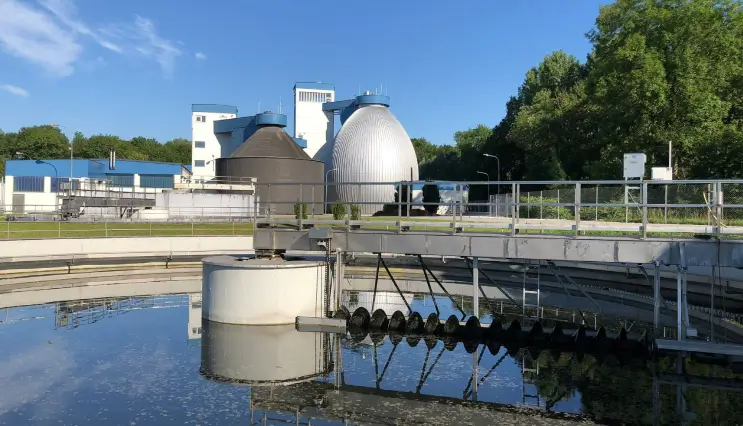
Municipal wastewater treatment plant and biosolids handling
What we handle

Every biosolids & sludge stream, one drying platform.

Different moisture profiles, different handling needs — the same engineering discipline behind each one.

Primary (Clarifier) Sludge

High-moisture sludge from primary clarification, dried into a stable, low-odor material.

Secondary / Biological (WAS) Sludge

Activated-sludge biosolids from the secondary treatment stage, dried and stabilized for easier handling.

Digested Biosolids (Class B → Class A)

Anaerobically digested cake dried to a stable, pathogen-reduced, Class A-capable product.

DAF (Dissolved Air Flotation) Sludge

High-fat, high-solids DAF float and industrial pretreatment sludge, dried without fouling your line.

Lagoon & Storage-Basin Dredged Sludge

Years of accumulated lagoon or storage-basin material, dried into manageable, haulable volume.

Water Treatment Plant (Alum/Lime) Residuals

Drinking-water treatment residuals dried for lower-cost landfill disposal or beneficial reuse.

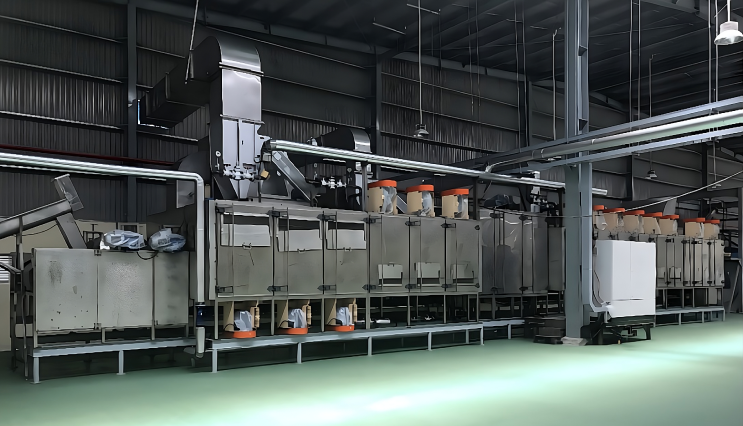
Continuous industrial dryer specifications and drying line
Technical specifications

Built around your sludge — not off a shelf

Every dryer is sized to your sludge or biosolids' feed solids content, moisture target and daily throughput. These are the ranges we engineer within:

  • Independently controlled multi-zone heating with dedicated coils & fans
  • Mid-section product overturn for edge-to-edge uniform drying
  • Corrosion-resistant or food-grade construction, matched to your application
  • Integrated cooling section & exhaust-air heat recovery, waste-heat-ready
Belt width700 – 3,250 mm
Dryer length10 – 45 m
Output capacity200 – 2,000 kg/hr per line
Feed solids15 – 35% dry solids (sludge/biosolids)
Discharge moisture10 – 20%, to your end-use spec
Temperature control±1°C (PID, zone-logged)
ConstructionStainless / mild steel, corrosion-resistant or food-grade
Heat sourceGas · Steam · Waste heat · Electric · Thermic fluid
Trial availableYes — on your own material
Why drying, why now

Six forces are pushing every WWTP to rethink sludge & biosolids handling.

If any of these sound familiar, drying changes your operations.

Rising Disposal & Hauling Costs

Landfill tipping fees and hauling costs for biosolids have climbed steadily across the country for two decades, with capacity shrinking near many metro areas.

Tightening Federal & State Regulation

EPA's 40 CFR Part 503 framework, its July 2026 draft PFOA/PFOS guidance, and 10+ state-level rules continue to narrow what utilities can do with land-applied biosolids.

Land & Storage Constraints

On-site lagoons, storage basins, and shrinking land-application acreage consume valuable space and draw community and regulatory scrutiny.

Volume & Transport Cost

Wet biosolids are heavy and bulky to move. Reducing moisture content cuts volume 3–6x, and haulage cost along with it.

Community & Regulatory Scrutiny

Odor, runoff, and visible sludge stockpiles near plant sites increasingly draw attention from regulators and neighboring communities alike.

Bottom Line

Most WWTPs already operate digesters and dewatering infrastructure that make drying a natural next step — not a ground-up capital project.

Picking the wrong dryer is expensive.

Wrong vendor / wrong spec
  • Incorrect plant layout & machinery selection
  • Low quantity and inconsistent quality of output
  • Batch rejections from inconsistent drying
  • Frequent breakdowns, high manpower cost
  • Low return on investment
  • High operation, maintenance and lifetime cost
The Gem way
  • Pilot-tested layout matched to your biosolids/sludge profile
  • Consistent moisture target — every batch
  • Spec verified at our facility before purchase
  • Predictable maintenance, low breakdown rate
  • Right-sized investment for your volume
  • 1-year warranty + spares + commissioning training

Seven things you'll only get from us.

Said in plain language. No consultancy-speak.

✓

Reliable & Durable

Dryers built to run continuously, not seasonally.

🛡

Compliance-Minded

Specs designed with the EPA Part 503 and PFAS guidance framework in mind.

⚙

Standardized & Low Maintenance

Engineered for easy spares, predictable service — under 0.5% spares cost typical.

☑

Consistent Output Quality

Repeatable moisture targets, batch after batch.

🏗

Engineering Quality

26+ years of design refinement built into every weld.

⚖

Low Cost of Ownership

Pilot trial → right-sized capex → predictable running cost.

💛

Service That Doesn't Disappear

Founder-led — issues escalate without bureaucracy.

Our journey

From vision to global execution.

To dryers running on four continents.

1999
Founded

GEM begins with a focus on tea & coconut processing systems.

2003
Engineering Foundation

Director joins business with a Finance & Economics degree, UT Austin.

2015
Product Evolution

First large band dryer (3250mm) for Franklin Baker, Philippines.

2020+
Sludge & Specialty

Expansion into biosolids, sludge and organic-residue drying, including municipal wastewater treatment plants.

2026
Global Scale

112+ dryers delivered · Representatives in USA, Australia, Africa, South America.

Service & spares

We don't sell and vanish — we keep your line running

"No buy-and-fly." A retained engineering partnership backs every dryer long after commissioning — which is a big reason 88% of our clients come back for their next machine.

01

Remote diagnostics

Because the dryer is IoT-connected, our engineers can read its live data and often diagnose — even resolve — an issue before a service truck ever rolls.

02

Guaranteed spares

Critical spares stocked and dispatched fast worldwide. Historically under 0.5% of machine value per year — a total cost of ownership finance teams love.

03

Annual Maintenance Contracts

Scheduled preventive maintenance and priority response keep uptime high and surprises low. We plan the service so your operators don't fight fires.

04

Commissioning & training

On-site installation, commissioning and hands-on operator training so your team runs the line confidently and safely from day one.

05

Lifetime engineering support

Process tweaks, capacity upgrades, new-stream trials — a long-term partnership, not a one-time transaction. We stay on the line with you.

06

Built to run for years

Simple, rugged, low-part-count engineering means fewer things to fail — and clients running 4+ years of continuous operation with minimal maintenance.

Proven engineering, growing U.S. municipal base

26+ years of continuous-belt-dryer engineering, now serving U.S. WWTPs

Our belt dryers run in municipal and industrial sludge applications across 15+ countries. Ask us for current municipal references in your state as our U.S. installed base grows.

★★★★★

"Consolidated 3 dryers into 1 — with 5× the capacity. The footprint and energy savings changed the economics of our line."

NLFP LLC Food processing · United States
★★★★★

"The installation and commissioning of the dryer for belt press sludge and centri-cleaner sludge were carried out seamlessly. The equipment demonstrated reliable operation and high-quality workmanship."

Gayatrishakti Paper & Boards Paper mill · India
★★★★★

"4+ years of continuous operation with minimal maintenance. It simply runs — that's what we needed."

Mayora Group FMCG manufacturing · Indonesia
✓ UL 508A Panels
✓ NFPA 79 Wiring
✓ NFPA Combustible-Dust Guidance
✓ CE Marking (opt.)
✓ ISO-Aligned Manufacturing
✓ Govt. of India Export House

See what your plant could stop hauling once your biosolids are dried right

Send us your sludge profile and throughput. We'll size the right dryer, run a free lab trial, and show you the hauling, disposal-cost and Class A upside — usually within 24 hours.

Questions, answered

Municipal wastewater & biosolids dryer FAQ — USA

What sludge and biosolids streams does Gem Drytech dry? +
Primary and waste activated sludge (WAS), anaerobically digested biosolids, DAF/dissolved-air-flotation sludge, lagoon-dredged material, water treatment plant residuals, and dewatered cake straight off a belt press or centrifuge — from POTWs of every size across the U.S.
How does drying help with the EPA's 2026 PFAS biosolids guidance? +
EPA released draft guidance on PFOA/PFOS in biosolids on July 1, 2026, and at least 10 U.S. states have introduced or passed their own PFAS-in-biosolids limits, several using a tiered concentration framework that restricts or bans land application above set thresholds. Drying doesn't remove PFAS, but it cuts the volume you have to land-apply, landfill or incinerate by 3–6x, and gives you a stable, batch-logged output — so whichever compliance route your utility ends up on, you're moving less material and can document exactly what left your gate.
Do you have equipment installed and operating in the USA? +
Yes, and we're actively growing our installed base in the U.S. municipal sector. NLFP LLC, a U.S. processor, consolidated three older dryers into one Gem dryer with five times the capacity — the same continuous-belt platform we size for WWTP biosolids. Current municipal references available on request.
Can drying help us reach EPA Part 503 Class A biosolids? +
Yes. Thermal drying to the right time/temperature combination is one of EPA's recognized Processes to Further Reduce Pathogens (PFRP) under 40 CFR Part 503. We engineer the dryer's zone temperatures and dwell time to your target, and log every batch so your operations team has the documentation regulators expect.
Can you support U.S. import, installation and after-sales service? +
Yes. We're a Government of India Recognized Export House with English-speaking engineers, remote commissioning support and long-term Annual Maintenance Contracts. Control panels are built to UL 508A and machine wiring to NFPA 79 so equipment is ready for U.S. electrical inspection.
Can you dry a sample of our actual biosolids before we commit? +
Yes — that's our standard process. Send us a representative sample of your dewatered cake and we'll run it on our pilot/lab unit, then share real moisture-reduction, throughput and mass-balance data so your utility commits based on evidence, not assumptions.
What throughput and construction options are available? +
Standard output ranges 200–2,000 kg/hr per line, with belt widths to 3,250 mm and lengths to 45 m — sized for plants from under 10 to 75+ wet tons per day. Construction is corrosion-resistant stainless matched to biosolids' typical solids and pH profile, and the system is fuel-flexible: gas, steam, electric, thermic fluid or digester-gas/waste heat.
Is it safe for combustible dust from dried biosolids? +
Yes. Dried biosolids can generate combustible dust, so we integrate infrared spark/ember detection with high-speed water-spray suppression, engineered to NFPA combustible-dust guidance, alongside over-temperature protection and automated safety interlocks.
How long does a typical municipal project take? +
Most utilities move from first enquiry to a commissioned, running dryer in 6–10 months: a free lab trial on your own biosolids, a sized quote, 12–16 weeks of manufacturing, then shipping, on-site installation, commissioning and operator training.
Do you support U.S. RFP, bid and engineering specifications? +
Yes. We work with municipal engineers, EPCs and process consultants to align our specifications with your bid documents, and can provide the technical submittals typically required for capital procurement at a POTW.
What service and spares support do we get after installation? +
"No buy-and-fly." You get on-site commissioning and operator training, Annual Maintenance Contracts with priority response, remote diagnostics over IoT (often resolving issues before a truck-roll), and guaranteed fast spares — historically under 0.5% of machine value per year. 88% of our clients come back for their next dryer.
WhatsApp Get a Quote